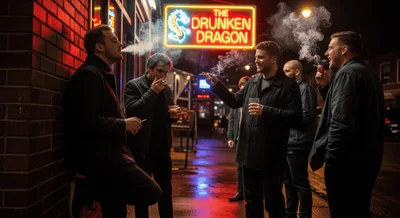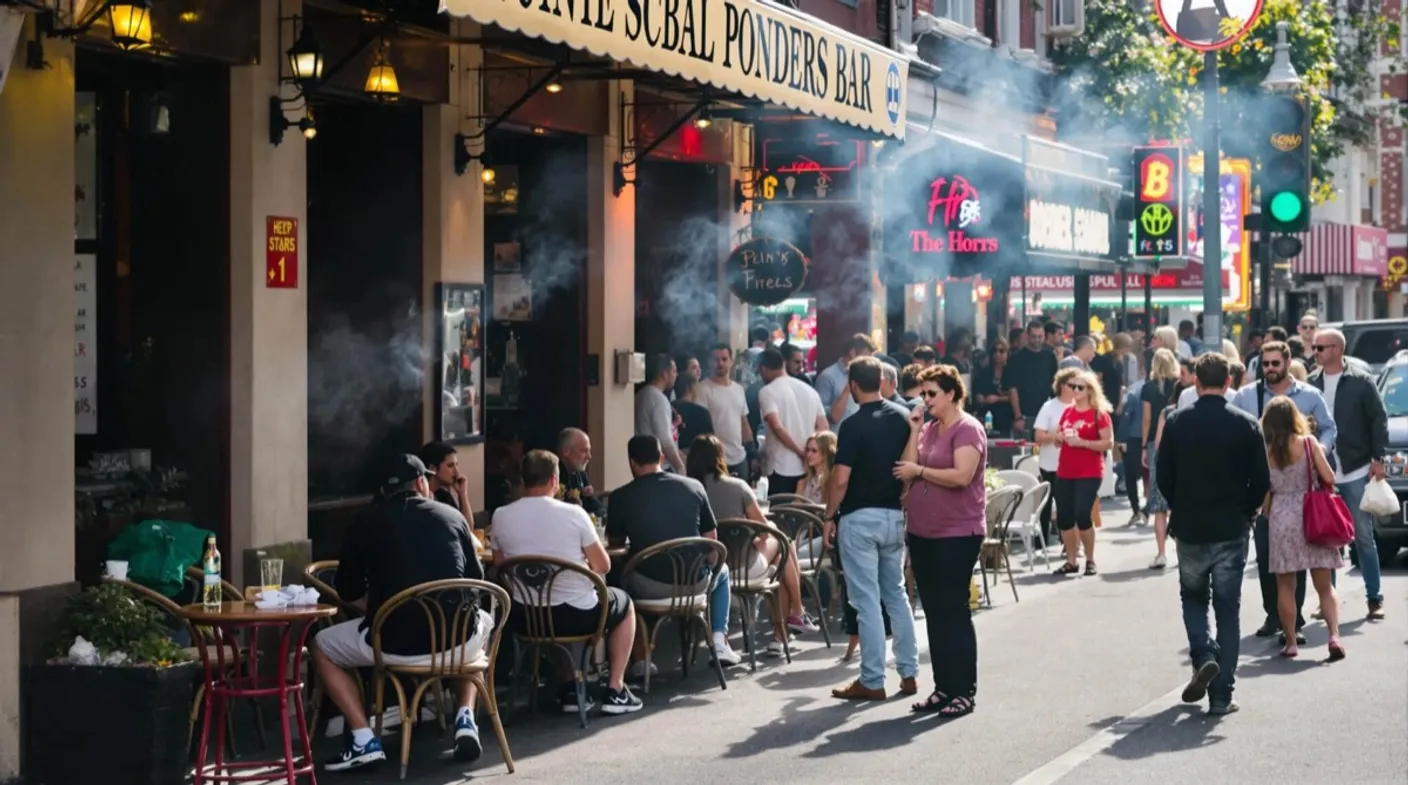
What seems like a straightforward question – “can you smoke in bars?” – actually opens up a complex web of regulations, cultural differences, and evolving social norms.
The answer isn’t as simple as you’d think. While many countries have implemented comprehensive smoking bans in hospitality venues, others maintain more relaxed approaches or offer creative workarounds. From designated smoking rooms in German bars to Japan’s evolving regulations, the landscape of where you can light up whilst enjoying a drink continues to shift.
Whether you’re a smoker planning your next night out or simply curious about how these laws affect your local drinking establishments, understanding the current smoking regulations can help you navigate the modern pub scene with confidence.
UK smoking ban: No smoking allowed in bars since 2007
No, you cannot smoke in UK bars. The Health Act 2006 introduced a comprehensive smoking ban that has prohibited smoking in all enclosed public spaces since 1st July 2007, including pubs, restaurants, and bars.
The 2007 smoking ban overview
The Health Act 2006 marked a watershed moment for UK hospitality, introducing a comprehensive smoking ban that transformed how bars and restaurants operate. From 1st July 2007, smoking became prohibited in all enclosed public spaces, including your pub, restaurant, or bar—no exceptions, no designated areas, no clever workarounds.
This sweeping legislation covers all tobacco products, including pipes, cigars, and now extends to e-cigarettes in many establishments. The ban applies to your entire indoor premises, from the main bar area to back offices, storage rooms, and even covered beer gardens with substantial roofing.
The only permissible smoking areas are genuinely outdoor spaces—think uncovered patios, beer gardens open to the sky, or designated smoking shelters that meet specific ventilation requirements. These areas must be substantially open to the outdoors, meaning at least 50% of the perimeter must be open air.
Legal framework and enforcement
Local authorities hold the primary responsibility for enforcing smoking regulations, with environmental health officers serving as frontline enforcers. These officers can enter premises without warning, issue fixed penalty notices on the spot, and initiate prosecution proceedings.
You’re legally required to display no-smoking signs in prominent locations, ensure customers comply with the ban, and take reasonable steps to prevent smoking. Your responsibilities include asking customers to extinguish cigarettes, removing ashtrays from indoor areas, and maintaining incident records.
Environmental health officers typically respond to complaints from the public, or during routine inspections. They’re looking for evidence of active smoking, inadequate signage, or failure to prevent violations.
Penalties for non-compliance
Customers caught smoking face fixed penalty notices of £50, reducible to £30 if paid within 15 days. As a premisesoperator, you face fines up to £2,500 for failing to display appropriate signage or not taking reasonable steps to prevent smoking.
| Violation Type | Fixed Penalty | Maximum Court Fine | Reduction Period |
|---|---|---|---|
| Individual smoking | £50 | £200 | £30 if paid within 15 days |
| Inadequate signage | £200 | £1,000 | £150 if paid within 15 days |
| Failing to prevent smoking | £500 | £2,500 | £300 if paid within 15 days |
Beyond financial penalties, violations can trigger licensing reviews, insurance complications, and reputational damage through social media and negative reviews.
Which establishments ban smoking: Pubs, clubs, and hotels
All hospitality venues in the UK must comply with the smoking ban, regardless of their type or ownership structure. The regulations apply universally across traditional pubs, private clubs, hotels, and their outdoor areas.
Traditional pubs and bars
Your traditional pub or bar sits at the heart of smoking legislation enforcement. The law applies regardless of whether you’re running a gastropub, sports bar, or traditional boozer – if customers can enter your premises, smoking is prohibited indoors.
The regulations don’t distinguish between different types of tobacco products or e-cigarettes – they’re all banned indoors. Staff areas, including break rooms, offices, and storage areas, must also remain smoke-free.
Private members’ clubs
Private members’ clubs fall under the same regulations as public venues, despite the membership requirement. The “private” nature doesn’t override public health legislation. Members and guests cannot smoke in club indoor areas, including dining rooms, bars, and meeting spaces.
Hotel bars and restaurants
Hotel establishments must navigate smoking regulations across multiple areas – from restaurants and bars to conference facilities. The regulations apply equally to hotel guests and external diners, with no exceptions for residents or special events.
Outdoor areas and beer gardens
Outdoor areas represent your greatest opportunity for accommodating smoking customers while maintaining compliance. Your outdoor space must be genuinely open to the elements – areas with substantial roofing don’t qualify as outdoor spaces, even with excellent ventilation.
Where you can smoke: Outdoor areas and legal requirements
You can only smoke in genuinely outdoor spaces that meet specific structural and ventilation criteria. These areas must be substantially open to the sky, with at least 50% of the perimeter permanently open to outside air.
Outdoor smoking spaces
Your outdoor smoking area isn’t just a necessity—it’s an opportunity to extend your hospitalitybeyond four walls. These spaces must be substantially open to the sky, creating genuine al fresco extensions rather than enclosed smoking rooms.
Well-designed outdoor smoking spaces with weather protection, quality furniture, and ambient lighting can transform basic areas into destinations that increase dwell time and customer spending.
Covered areas and legal requirements
Any structure with a roof requires at least 50% of its perimeter to be permanently open to outside air. This isn’t a suggestion—it’s the legal threshold between compliant and non-compliant spaces.
You must actively manage these spaces, ensuring customers understand boundaries and comply with smoking restrictions through clear signage and staff training.
Vaping in bars: E-cigarettes follow same smoking ban rules
E-cigarettes and vaping devices are banned in all enclosed public spaces, just like traditional tobacco products. The Health Act 2006 doesn’t discriminate between cigarettes and vaping devices—both are prohibited indoors.
Current legal status in bars
E-cigarettes and vaping devices fall under the same smoking ban that governs traditional tobacco products. The Health Act 2006 doesn’t discriminate between cigarettes and vaping devices—both are prohibited in all enclosed public spaces.
The legislation takes a precautionary approach, recognising that secondhand vapour exposure remains a concern for staff and customers. Enforcement mechanisms remain identical, with fines ranging from £50 for individuals to £2,500 for premises.
Individual establishment policies
Many successful bars and restaurants have adopted comprehensive vaping policies that exceed legal requirements, creating clearer boundaries and better customer experiences. You can implement stricter policies, including prohibiting vaping entirely, or creating designated vaping zones.
Consider your clientele when crafting policies—trendy cocktail bars might embrace vaping-friendly outdoor spaces, whilst family restaurants might choose zero-tolerance approaches.
Smoking exceptions: Private homes, theatres, and research
Very few exceptions exist to the UK smoking ban, limited to specific circumstances like private residences used for business, theatrical performances, and research facilities. These exceptions require strict compliance with additional regulations.
Private residences used for business
If you’re operating hospitality from a private residence, the principle remains clear: if paying customers can access spaces, they’re considered public places under the Health Act 2006. Bed and breakfasts and home-based restaurants must ensure customer areas remain smoke-free during operating hours.
Theatrical performances
Special provisions exist for theatrical performances where smoking forms an essential element of artistic work. However, these exceptions require stringent conditions, detailed risk assessments, and consultation with local authorities.
Comparison with other countries
European Union regulations
The EU presents a regulatory patchwork. Germany allows designated smoking rooms with strict ventilation standards, whilst France mirrors the UK’s comprehensive approach. Italy permits smoking rooms with sophisticated ventilation, but they cannot serve food or drinks.
United States smoking laws
American regulations vary dramatically by state. New York maintains comprehensive bans, whilst Nevada allows smoking in casino gaming areas. This patchwork creates compliance challenges for multi-state operators.
Global trends
Japan allows smoking in bars under 100 square metres, Australia extends bans to outdoor dining areas, and Singapore maintains zero-tolerance policies with substantial fines. The emerging pattern suggests global momentum towards stricter regulations.
Conclusion
Understanding smoking regulations in bars requires navigating a complex landscape that varies dramatically worldwide. The UK’s comprehensive approach through the Health Act 2006 represents one of the strictest global frameworks, creating predictable expectations for customers and businesses.
Whether you’re planning a night out or managing a hospitality venue, success depends on understanding these regulations. The landscape continues evolving with new products like e-cigarettes and changing social attitudes towards smoking.
Stay informed about local laws and always check current regulations before making assumptions about what’s permitted in any drinking establishment.
Frequently asked questions
Can pubs and bars create outdoor smoking areas?
Yes, pubs and bars can create compliant outdoor smoking areas that meet specific legal requirements. These areas must have substantial openness to the sky and proper ventilation according to guidelines. Operators should design these spaces thoughtfully, balancing comfort and compliance whilst ensuring clear signage and staff training.
Do vaping regulations differ from traditional smoking laws in the UK?
No, vaping regulations are treated similarly to traditional smoking under the Health Act 2006. E-cigarettes and vaping are prohibited in all enclosed public spaces, with the same penalties for violations. Establishments are encouraged to adopt comprehensive vaping policies that exceed legal requirements for clearer boundaries.
Are there any exceptions to the UK smoking ban?
Limited exceptions exist under strict conditions, such as research facilities conducting tobacco-related studies and specific theatrical performances where smoking is integral to the show. These require stringent approvals and health measures. Private residences used for business are considered public spaces if accessible to paying customers.