Every successful restaurant needs more than great recipes and service—it needs a rock-solid supply chain. Even the most talented chef can’t succeed if suppliers let you down, or drain your budget.
So where do restaurants actually source their supplies? The landscape is diverse and complex, ranging from massive broadline distributors handling everything from napkins to steaks, to local farms delivering fresh produce directly to your door.
Whether you’re launching your first restaurant or optimizing an existing operation, understanding your sourcing options is crucial. Some channels offer convenience, others provide better margins, and a few might give you access to unique products your competitors can’t get. Let’s explore where restaurants source their goods, and how to choose the right mix for your operation.
Broadline foodservice distributors
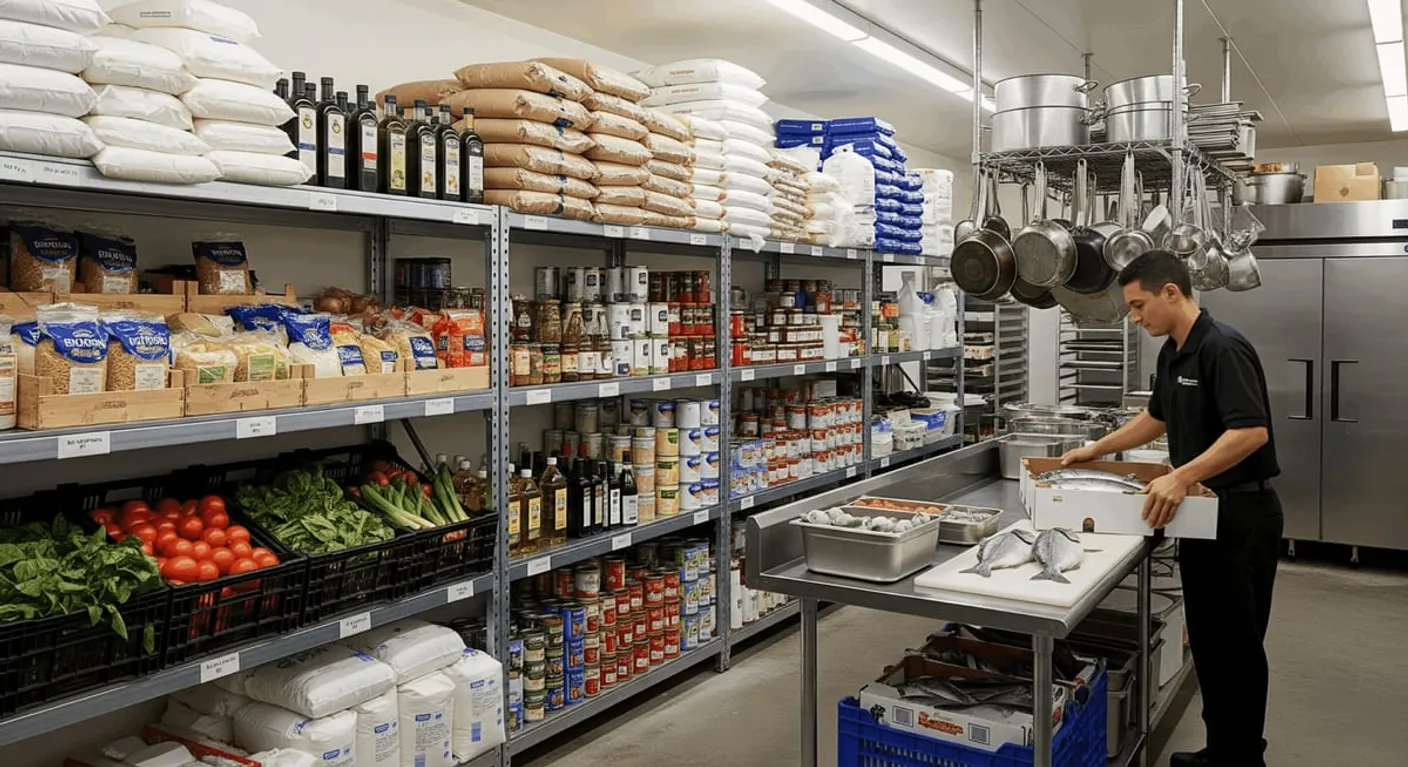
Broadline distributors like Sysco, US Foods, and Performance Food Group are the workhorses of restaurant supply, carrying everything from produce to cleaning supplies. The beauty lies in convenience—fewer deliveries, invoices, and vendor relationships to manage, which is invaluable for busy operations.
The trade-off? Higher prices. You’re paying for service, breadth, and reliability—including that sales rep who answers your panicked 6 AM calls.
Most operate on weekly delivery schedules (daily for high-volume accounts) and offer credit terms (net 7-30), providing crucial cash flow relief.
Insider tip: negotiate. Volume commitments and exclusive partnerships give you leverage—broadline reps have wiggle room if you ask.
Specialty food distributors
When your menu demands artisanal cheeses, wild-caught seafood, organic produce, or obscure spice blends, specialty distributors step into the spotlight. These niche vendors offer deeper selection and superior quality compared to broadline catalogs.
Seafood distributors bring fresh catches with unmatched traceability. Produce specialists source from regional farms at peak freshness. Beverage distributors provide access to exclusive craft labels. Ethnic food suppliers are goldmines for specific culinary traditions.
The upside? Menu distinction. Sourcing duck confit from French importers or heritage grains from farm-to-table distributors means buying story, quality, and differentiation—not just ingredients.
The downside? More complexity. Multiple delivery schedules, invoices, and relationships require serious organizational skills. But for restaurants where food quality defines the brand, specialty distributors aren’t optional—they’re essential.
Many offer smaller minimums than broadlines, perfect for independents testing menu items or managing limited storage. Plus, their sales teams are genuine experts who can guide you toward the best cuts, ripest produce, or perfect pairings.
Cash and carry wholesale stores
Restaurant Depot, Costco Business Center, Sam’s Club—these cash-and-carry warehouses offer a simple model: shop, pay, haul it out yourself. No delivery fees, minimums, or sales visits. Just straightforward, often significantly cheaper prices.
For smaller restaurants and food trucks, these stores are invaluable. Emergency case of tomatoes when delivery’s delayed? Price comparison shopping before larger orders? Cash and carry delivers.
The savings come from eliminating middleman services—you handle shopping, loading, and transport. But factor in your time. Three hours weekly at Restaurant Depot might cost more than paying for delivery.
Cash-and-carry excels in certain categories: disposables, cleaning supplies, shelf-stable items, and bulk dry goods see the steepest discounts. Plus, buying exact quantities for menu testing beats committing to full distributor cases.
Pro tip: membership requirements vary. Restaurant Depot requires business proof (tax ID, license), while Costco Business Center is more lenient. Bring paperwork on your first visit.
Direct from manufacturers and producers
Cutting out distributors and buying direct from manufacturers unlocks serious savings, but only with volume orders. Manufacturers require larger minimums and aren’t set up for small, flexible deliveries.
This works best for beverages (coffee roasters, breweries), bakery goods (bread suppliers), and proteins (meat processors). If you’re using 50 pounds of coffee weekly or 200 burger buns daily, direct purchasing could cut costs by 15-30%.
Building relationships matters—manufacturers value consistent, reliable orders. Commit to standing orders (weekly bread delivery, monthly canned goods) and you become an attractive customer. Some will even offer custom products or private labeling.
Storage is the main constraint. Direct buying means larger quantities, requiring adequate refrigeration, freezer, or dry storage space. Small kitchens may struggle with perishables but could handle dry goods or frozen products effectively.
Payment terms are typically less flexible—expect COD or credit card payments rather than net-30 terms. Ensure your cash flow can handle this before committing.
Local farms and farmers markets
Farm-to-table is a legitimate sourcing strategy that provides access to peak-freshness produce, pasture-raised meats, and seasonal specialties unavailable through traditional distributors.
The quality difference is substantial. Yesterday’s tomatoes taste fundamentally different from week-old produce that traveled cross-country. Fresh-harvested greens have a crispness that elevates dishes from forgettable to memorable. When ingredients are this good, they need minimal preparation, and guests notice.
Beyond quality, there’s the story. Diners increasingly care about food origins. Naming the specific farm or farmer creates connection and trust—authentic marketing gold, assuming you’re actually doing it.
The challenges? Seasonality and consistency. Local farms can’t provide strawberries in January. Yields fluctuate due to weather, requiring menu flexibility and creative problem-solving.
Pricing varies. Sometimes local is cheaper during peak season, sometimes more expensive for specialty items. But quality and marketing benefits often justify premiums.
Building farmer relationships takes time. Show up consistently, communicate needs clearly, and be reliable. Treat farmers as partners, not vendors, and they’ll work with you on pre-orders, custom growing, and delivery for sufficient volume.
Restaurant supply stores for equipment and smallwares
For equipment, cookware, utensils, and other non-food essentials, dedicated restaurant supply stores are your go-to, specializing in everything from commercial ranges to spatulas and serving platters.
Physical stores let you see and touch products before buying—crucial when investing in a $3,000 mixer or choosing chef’s knives. Staff typically have industry experience and offer genuine advice, not just spec sheet readings.
For smaller items (industry smallwares), these stores provide immediate solutions—walk out same-day with measuring cups, cutting boards, or mixing bowls. No waiting, no minimum orders.
Local stores may cost more than online giants, but you’re paying for immediacy, expertise, and avoiding shipping costs on bulky items. Local pickup on heavy equipment can save a fortune versus freight shipping.
Many stores offer used equipment—a smart budget move. Refurbished ovens or prep tables might cost half the price of new while functioning just as well. Buy from reputable dealers who stand behind refurbished products.
Don’t overlook relationship potential. Good supply stores become trusted resources as you grow, offering advice on ventilation upgrades, equipment durability, and steering you toward smart investments while avoiding costly mistakes.
Online restaurant supply marketplaces
The digital revolution has transformed restaurant procurement. Online marketplaces like WebstaurantStore, KaTom, and Amazon Business offer massive selection, competitive pricing, and 24/7 convenience.
These platforms excel at comparison shopping—view fifteen stainless steel prep tables side-by-side with specs, reviews, and pricing. The transparency keeps prices competitive.
Watch shipping costs carefully. Many suppliers offer free shipping above $50-$100 thresholds, great for lightweight items. But bulky equipment can rack up freight charges. Always calculate total delivered cost.
Review systems provide valuable crowdsourced intelligence. Real operators share experiences: which cutting boards warp quickly, which blenders last years, which non-stick coatings fail fast. This helps you make smarter purchasing decisions.
For emergencies or specialty items, online marketplaces are lifesavers. Need an obscure replacement part for your 8-year-old slicer? It’s probably available online from multiple vendors.
The downside: you can’t test products before buying. Photos mislead, sizes surprise, and returns often involve restocking fees and shipping hassles. For significant investments, seeing products in person still makes sense.
How restaurants choose suppliers: key considerations
Choosing the right suppliers involves more than just comparing prices. Smart operators evaluate multiple factors to build a reliable supplier network that supports their operation.
Pricing and payment terms
While cost directly impacts profitability, look beyond the sticker price. Payment terms matter—a supplier charging 5% more with net-30 terms may benefit cash flow better than a cheaper COD supplier. Factor in volume discounts, promotional pricing, and hidden costs like order errors. A slightly pricier supplier with perfect accuracyoften beats a cheaper one with frequent mistakes.
Delivery reliability
Reliable delivery is non-negotiable. Late or incomplete deliveries force you to 86 menu items and disappoint guests. Match delivery frequency to your storage capacity and volume needs. Ensure suppliers can handle emergency orders and adjust schedules when needed. For multi-unit operators, choose suppliers with geographic coverage to simplify expansion.
Quality and consistency
Consistent quality trumps rock-bottom prices. Inconsistent products create kitchen chaos and guest dissatisfaction. Quality standards should align with your concept—fine dining requires different standards than casual spots. Consider using multiple suppliers: broadline distributors for commodity items, specialty suppliers for hero ingredients. Always test products with samples before committing to standing orders.
Build a diversified supply chain for restaurant success
Successful restaurants diversify their supply chains. A farm-to-table bistro might source produce locally, proteins from specialty distributors, dry goods from warehouses, and equipment online. This hybrid approach maximizes each channel’s strengths.
Your sourcing strategy should evolve with growth. Single-location solutions may not scale, and financial constraints shift over time. Stay open to testing new suppliers and channels.
Strong supplier relationships create competitive advantages through responsive service, reliable delivery, quality products, and fair pricing. Choose partners invested in your success.
Restaurants buy supplies everywhere, but the key question is: where should your restaurant buy? The answer depends on your concept, market, menu, and priorities. With proper knowledge, you can build a supply chain that fuels rather than hinders your success.
Frequently Asked Questions
How do restaurants negotiate better prices with food distributors?
Restaurants can negotiate by leveraging volume commitments, exclusive partnerships, or switching from competitors. Broadline sales reps typically have pricing flexibility. Building strong relationships, consolidating orders, and requesting seasonal promotional deals also help secure better pricing and payment terms.
Do restaurants need a business license to shop at wholesale food stores?
Requirements vary by warehouse. Restaurant Depot requires proof of business such as a tax ID and business license. Costco Business Center has more lenient membership requirements. Always bring proper business documentation when visiting wholesale stores for the first time.
What is the 30/30/30 Rule for Restaurants?
The 30/30/30 rule is a widely known guideline in the restaurant industry that helps businesses manage operations efficiently while maintaining profitability. It generally refers to the allocation of three key expenses: 30% food costs, 30% labor costs, and 30% overhead expenses.