Running a restaurant today means juggling in-house diners, multiple delivery apps, takeaway orders, and frazzled staff trying to keep up. One mistake with orders or pricing, and you’re losing money and customers.
Most operators patch together disconnected tools—separate POS systems, delivery tablets, and reservation platforms that don’t communicate. It’s exhausting and expensive.
An all-in-one order and menu management solution acts as mission control for your business. Orders from every channel land in one place, menus update instantly across all platforms, and your team can focus on customers instead of chaos. We’ll explore what these systems are, why they’re essential for modern restaurants, key features to prioritize, and the immediate benefits you’ll experience.
All-in-one solutions centralize every restaurant operation
An all-in-one order and menu management solution is a centralized software platform that consolidates every aspect of order handling, menu control, and service delivery into a single, streamlined system. Instead of wrestling with separate apps for your POS, online ordering, delivery integrations, reservations, and menu updates, everything lives and breathes in one unified hub.
Let’s get practical. Imagine you’re running a bustling tapas bar. A customer at table 7 orders via QR code, someone on Uber Eats requests delivery across town, and a regular calls in a takeaway order, all within two minutes. With fragmented systems, your staff is toggling between devices, manually entering orders, and praying nothing gets lost in translation. But with an integrated solution, all three orders ping into the same kitchen display, sync with your POS, update inventory in real-time, and get tracked from prep to pickup or delivery.
These platforms typically weave together:
- Point of Sale (POS) that handles in-house transactions, table management, and split bills
- Digital menus (QR codes, web-based, app-integrated) that customers can browse and order from directly
- Order aggregation from third-party delivery apps (think Uber Eats, Glovo, etc.) funneled into one system
- Kitchen display systems (KDS) replacing paper tickets with real-time digital screens
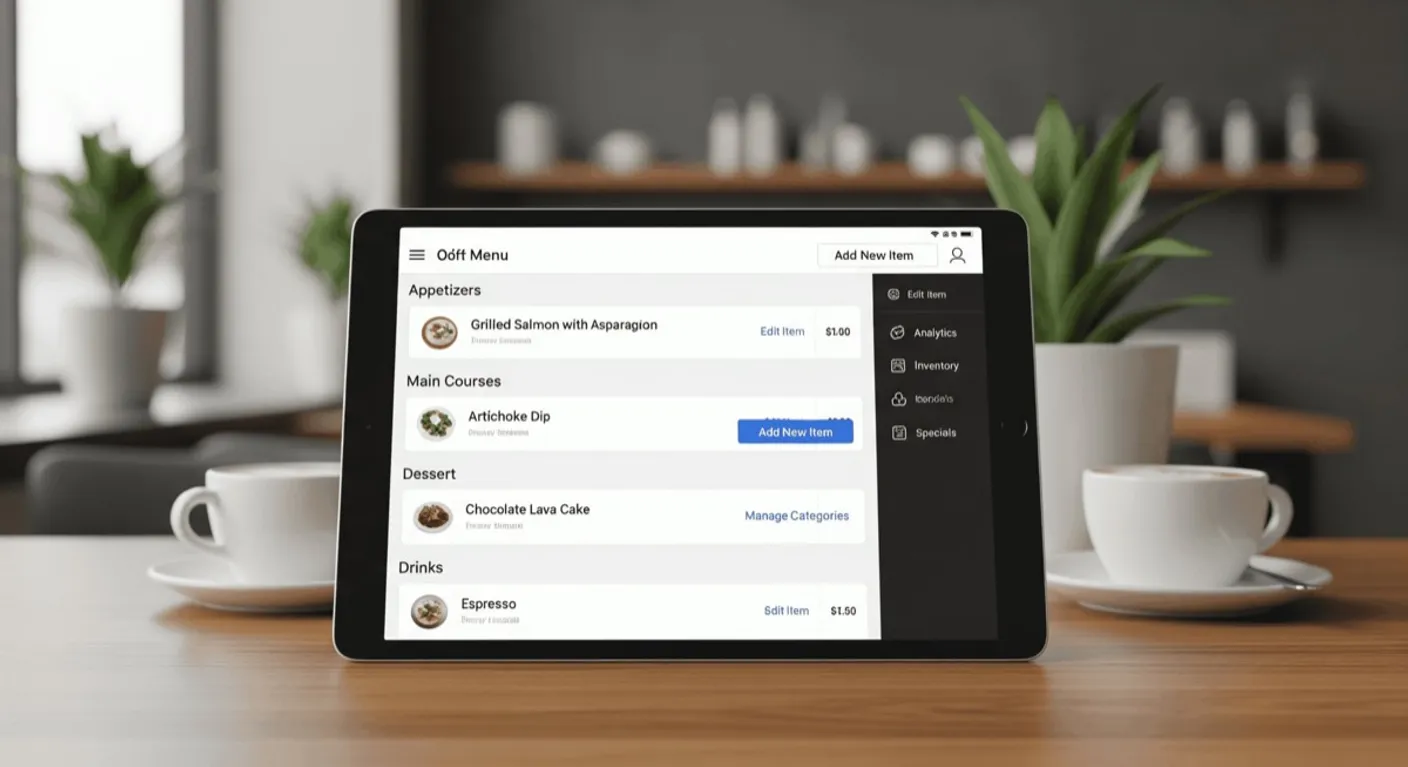
- Menu management that lets you update prices, descriptions, availability, and specials instantly across every channel
- Analytics and reporting so you can track what’s selling, what’s sitting, and where your money’s actually going
Fragmented systems cost restaurants money and efficiency
Hospitality margins are razor-thin. Between rising costs, labor shortages, and delivery platforms taking up to 30% commissions, you can’t afford operational inefficiencies.
Here’s where fragmented systems hurt you:
The commission trap. Third-party delivery apps eat into every sale. Without your own integrated ordering channel, you’re paying rent to someone else’s platform forever. Unified systems let you build commission-free ordering via your website, reclaiming lost revenue.
Error overload. Manual order entry breeds mistakes—misheared substitutions, lost tickets, wrong transcriptions. Integrated digital ordering reduces order errors by up to 35%, meaning fewer refunds, less waste, and happier customers.
Operational chaos. Teams juggling multiple screens (POS, delivery, reservations) work slower and burn out faster. Unified systems centralize everything, simplifying training and letting waitstaff handle orders in seconds from smartphones instead of running to stationary terminals.
Lack of visibility. Fragmented tools give fragmented insights. You can’t identify profitable menu items, worthwhile delivery channels, or optimal staffing without centralized data. Integrated platforms deliver real-time analytics on sales, performance, and productivity for smarter decisions.
Compliance headaches. In Spain, regulations like Verifactu and TicketBAI require precise automated invoicing. Managing compliance manually across disconnected systems invites errors and fines up to €7,500. Unified platforms automate compliant invoicing and keep books audit-ready.
Essential features that transform restaurant operations
Not all all-in-one systems are created equal. Some are glorified POS terminals; others are genuinely transformative. Here’s what to look for when evaluating a platform.
Centralized menu control
Update your menu once – pricing, descriptions, photos, allergen info, availability – and have it cascade instantly across your POS, QR code digital menu, website ordering, and integrated third-party delivery apps.
Why it’s essential: Add a weekend brunch special Friday night, and it’s live everywhere by Saturday morning. No manual updates across multiple platforms. Toggle items on or off in real-time when you’re out of stock. Some systems support multi-language menus and automatic translation for tourist-heavy locations.
Bonus: Look for scheduled menu changes (lunch to dinner at 5 PM) and dietary filters (vegan, gluten-free).
Real-time order tracking
All orders – dine-in, QR code, phone, website, delivery apps – funnel into one unified dashboard and kitchen display. Kitchen staff see every ticket in priority order with clear statuses: queued, in prep, ready, out for delivery.
Why it matters: No missed orders or double entries. Front-of-house can give accurate timing, delivery drivers get precise pickup times, and bottlenecks are instantly visible. Automated SMS updates (“Your paella is 5 minutes away”) reduce customer calls.
Look for: Kitchen display system integration, configurable alerts, and order grouping to optimize prep efficiency.
Multi-location support
Your platform should handle multi-location management with separate menus, inventory, and reporting per site, plus centralized oversight and consolidated analytics.
Why it’s essential: Compare performance across locations and maintain brand consistency. If downtown crushes weekend brunch while suburban struggles, the data shows you where to adjust.
Bonus: Support for different concepts (pizza joint + cocktail bar) within one account, each with distinct menus but shared backend management.
Dynamic pricing tools
Run happy hour discounts, BOGO deals, seasonal promotions, or upsell suggestions without needing developers or waiting for updates.
Why this drives revenue: Respond to demand in real-time. Slow Tuesday? Push flash discounts. Weekend rush? Highlight high-margin items. Studies show 75% of customers order more when digital menus suggest add-ons – that’s an easy 15%+ ticket boost.
Look for: Scheduled promotions, customer segment targeting, A/B testing capabilities, and automatic discount application at checkout.
Real-world benefits that boost your bottom line
Theory is great, but what does this actually do for your business? Let’s talk real-world wins that show up in your bank account and customer reviews.
Time and efficiency gains
Integrated systems collapse dozens of manual tasks into automated processes. Menu changes that once took an hour now take 30 seconds. Staff training shrinks with one intuitive interface instead of multiple clunky tools.
The math: if your team saves 15 minutes per service on order reconciliation and updates, that’s 90+ hours monthly. At $15/hour labor cost, you’ve saved $1,350 on administrative time alone. Add faster table turns (up to 5% improvement), and you’re serving more customers without hiring more staff.
When waitstaff aren’t running around or deciphering messy tickets, they focus on hospitality, upselling, and creating memorable experiences.
Fewer errors and mistakes
Manual order entry introduces costly mistakes—wrong dishes, missed allergies, double charges. Each error wastes food, requires comps, and erodes customer trust.
Digital ordering through integrated systems slashes order errors by up to 60%. Customer self-input eliminates transcription risks, allergen info gets flagged clearly, and orders flow directly to kitchen displays.
Fewer errors mean less staff stress, fewer negative reviews, and better tips (20% average increase reported with smoother digital payments).
Better customer experience
Today’s diners expect convenience and speed. They want to browse menus at their own pace, order without waiting for servers, split bills easily, and pay from their phones.
Integrated solutions deliver: QR code menus with photos and dietary filters, self-ordering that cuts wait times by 20%, and instant mobile payments. The result? Higher satisfaction, 15% increase in repeat visits, and better reviews.
Plus, you capture customer data for personalized marketing: “Hey, we noticed you love our tacos, here’s 10% off your next visit.”
Remember: 44% of potential diners abandon restaurants with poor online experiences. Don’t lose customers to outdated systems.
Qamarero: The complete all-in-one solution for restaurants
Qamarero exemplifies this evolution in hospitality technology, offering restaurants a comprehensive all-in-one solution designed by industry professionals who understand the daily challenges of running a food service business.
The platform unifies POS systems, digital ordering, QR code menus, kitchen displays, and delivery management while requiring no expensive proprietary hardware—everything works on standard smartphones and tablets.
What sets Qamarero apart is their commitment to simplicity and genuine support, providing 24/7 human assistance via WhatsApp, 365 days a year. This solution helps restaurants eliminate costly third-party delivery commissions, reduce order errors by up to 35%, and boost average ticket values by 15-25%, all while ensuring compliance with regulations like Verifactu and TicketBAI.
Built with transparency and efficiency at its core, Qamarero empowers hospitality businesses to reclaim control of their operations, increase profitability, and focus on what matters most: creating exceptional dining experiences for their customers.
Why integrated solutions are essential for restaurant success
The hospitality landscape is getting tougher—rising expectations, fierce competition, razor-thin margins. Managing orders, menus, delivery, and analytics with disconnected tools is like running a marathon in flip-flops: exhausting and inefficient.
An all-in-one order and menu management solution changes everything. It centralizes operations, eliminates errors, frees your team from tech juggling, and provides data for smarter, faster decisions. Whether you’re a city bistro or multi-location brand, these platforms deliver real ROI: more revenue, lower costs, happier staff, and loyal customers.
The tools are accessible (no expensive hardware or PhD required). The question isn’t whether to upgrade—it’s when.
Frequently Asked Questions
How can unified order management reduce restaurant operating costs?
Unified systems reduce costs by eliminating manual order entry errors (cutting mistakes by up to 60%), saving administrative time (over 90 hours monthly), and enabling commission-free direct ordering to avoid third-party delivery fees of up to 30%.
Can I update my menu across all platforms at once?
Yes, centralized menu control lets you update pricing, availability, descriptions, and photos once, instantly cascading changes across your POS, QR code menus, website, and integrated third-party delivery apps simultaneously.
How long does it take to implement a unified order management platform?
Implementation time varies by provider and restaurant complexity, but many modern cloud-based solutions can be deployed within days to weeks without expensive proprietary hardware, offering intuitive interfaces that simplify staff training significantly.
What are the 4 types of ordering systems?
The four types of ordering systems are traditional in-person ordering, online ordering, mobile app ordering, and self-service kiosks.